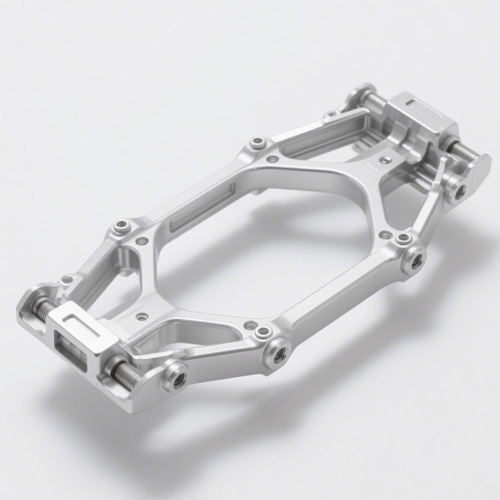
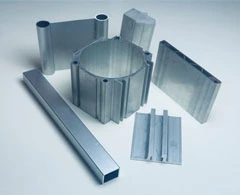
Aluminum extrusion (or aluminum extrusion molding) is a plastic processing method where a powerful pressure is applied to an aluminum billet placed in a mold cavity (or extrusion cylinder). This pressure forces the aluminum billet to undergo directional plastic deformation and be extruded through the die opening of the extrusion mold, resulting in parts or semi-finished products with the desired cross-sectional shape, dimensions, and certain mechanical properties.
The principle of aluminum extrusion is similar to squeezing toothpaste. When extruding aluminum alloy automotive crash beams and their molds, the aluminum ingot is divided into several metal streams under pressure, which enter the welding chamber through the diversion holes. In the welding chamber, these streams are re-welded under high temperature, high pressure, and high vacuum conditions, and finally flow out through the gap between the die core and the die opening, forming tubes or hollow profiles that meet the required dimensions and performance. If bending is needed, bending tools are added to the rear equipment.
Aluminum Extrusion Molds For product structure design engineers, although we do not design aluminum extrusion molds, understanding the basic structure of extrusion molds and the mechanism of how different extrusion profiles are formed can help optimize design to reduce mold costs and improve extrusion production efficiency.
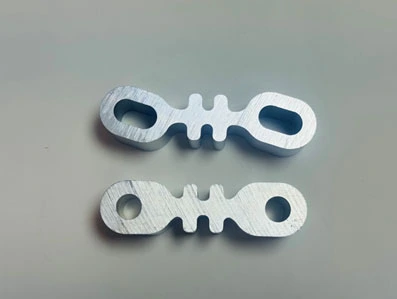
Durable and Long-lasting: One of the most notable advantages of aluminum is its resistance to corrosion and weathering. Aluminum naturally resists rust and corrosion without additional treatment due to a thin, naturally occurring oxide layer on its surface. Anodizing can further enhance its corrosion resistance.
Lightweight and Strong: Aluminum is over 33% lighter than steel while retaining most of its strength. The tensile strength of most aluminum alloys ranges from about 70 to 700 MPa, and its density is two-thirds that of steel.
Excellent Thermal Conductivity: Aluminum’s thermal conductivity is very similar to copper, but it is much lighter. Aluminum is an excellent conductor of heat, and the profile design of aluminum extrusions can maximize the heat dissipation surface area and form thermal channels. A typical example is the CPU heat sink in computers, where aluminum is used to dissipate heat from the CPU.
Easy to Process: Aluminum extrusions can be easily shaped, cut, drilled, machined, stamped, bent, and welded to suit specific purposes.
Short Mold Processing Cycle and Low Cost: The molds for aluminum extrusion are simple, with a short processing cycle and low cost. This is a comparison by the Aluminum Extruders Council (AEC) regarding aluminum extrusion and other processes, for reference only.
Aluminum is the metal of the future. It is not only environmentally friendly, lightweight, naturally corrosion-resistant, and strong, but also has excellent thermal and electrical conductivity. According to reports from the Aluminum Association (AA) and the Aluminum Extruders Council (AEC), the use of aluminum extrusions in the United States has grown for the sixth consecutive year, now accounting for nearly a quarter (22%) of the total aluminum market in North America. While the construction industry continues to dominate the use of aluminum extrusions, the industry usage has expanded as more engineers and designers realize the almost limitless design possibilities when using aluminum extrusions.
 EN
EN