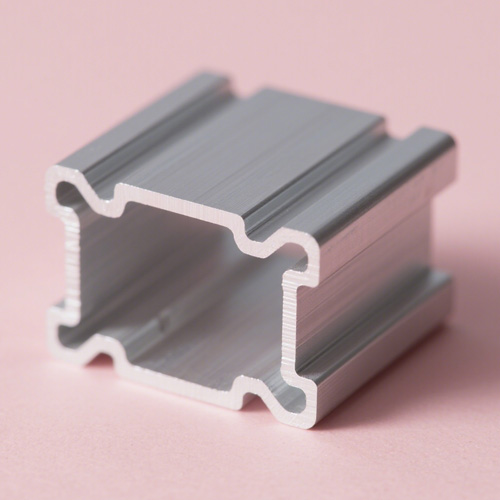
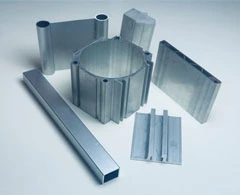
7075 aluminum extrusion is widely recognized for its high strength-to-weight ratio and excellent mechanical performance, making it suitable for demanding engineering applications. However, compared with common extrusion alloys such as 6063 and 6061, 7075 aluminum requires more advanced processing control due to its higher strength and more complex manufacturing requirements.
Choosing the right 7075 aluminum extrusion supplier requires more than checking material availability. Buyers should evaluate alloy selection, extrusion capability, die design, machining support, surface finishing options, quality control and the supplier's ability to support custom projects from prototype development to mass production.
This guide explains the characteristics of 7075 aluminum extrusion, why it is more challenging to manufacture, how it compares with 6061 aluminum extrusion, and what OEM buyers should consider when developing custom aluminum extrusion projects.
7075 aluminum is a high-strength aluminum alloy mainly known for its excellent mechanical properties and high strength-to-weight ratio. Compared with commonly used extrusion alloys such as 6063 and 6061, 7075 provides higher strength performance, making it suitable for applications where structural reliability and weight reduction are important.
6063 aluminum is widely used for standard extrusion profiles because of its excellent extrusion performance and surface finish capability. 6061 aluminum offers a good balance between strength, machinability and corrosion resistance, making it common in structural components.
7075 aluminum, however, is selected when higher mechanical performance is required. Its advantages include:
· High tensile and yield strength
· Excellent strength-to-weight ratio
· Good performance in high-stress applications
· Suitability for precision components and demanding structures
At the same time, 7075 aluminum is not always the best choice for every project. Its higher material strength also increases extrusion difficulty, processing requirements and manufacturing costs. The correct alloy selection should depend on the application's strength requirements, production method and budget considerations.
Although 7075 aluminum provides superior strength, it is more difficult to extrude compared with many common aluminum alloys. Manufacturers need stronger process control to achieve consistent dimensions, surface quality and mechanical performance.
The main manufacturing challenges include:
7075 aluminum has higher strength and hardness than standard extrusion alloys, meaning the extrusion process requires greater pressure and more careful temperature control. This places higher demands on extrusion equipment and process management.
Custom 7075 extrusion profiles often require detailed die design because complex cross-sections, thin walls and tight dimensional requirements can affect extrusion stability and product quality.
The final mechanical properties of 7075 aluminum depend heavily on heat treatment conditions. Proper temper selection, such as T6 or other specified conditions, is important for achieving the required performance.
Compared with softer extrusion alloys, 7075 requires stricter inspection and quality control to maintain profile accuracy, surface condition and consistency between production batches.
7075 and 6061 aluminum are both widely used engineering alloys, but they serve different project requirements. The better choice depends on the balance between strength, manufacturing complexity, cost and application conditions.
| Factor | 6061 Aluminum Extrusion | 7075 Aluminum Extrusion |
| Strength | Good structural strength | Higher strength performance |
| Extrusion Difficulty | Easier to extrude | Requires more advanced process control |
| Machining | Good machinability | Suitable for precision machining with proper control |
| Cost | Generally more economical | Higher material and processing cost |
| Typical Applications | General structural parts and industrial profiles | High-performance and high-load components |
For projects requiring maximum strength and reduced weight, 7075 aluminum extrusion can provide significant advantages. For applications where extrusion efficiency and cost control are more important, 6061 or 6063 aluminum may be more suitable.
OEM buyers should evaluate the complete application requirements rather than selecting an alloy based only on strength values.
Because of its excellent strength-to-weight ratio, 7075 aluminum extrusion is commonly considered for applications where lightweight construction and mechanical performance are important.
7075 aluminum has long been associated with aerospace components because aircraft structures require materials that combine low weight with high strength.
In automotive and transportation applications, lightweight materials can help improve efficiency while maintaining structural performance. 7075 aluminum extrusion can be considered for specialized components that require higher strength than standard aluminum profiles.
High-performance machinery, precision equipment and structural assemblies may use 7075 aluminum components when strength, rigidity and weight reduction are important design factors.
Robotic equipment and automated systems often require lightweight but rigid components. 7075 aluminum can be suitable for parts exposed to repeated movement and mechanical loads.
A successful 7075 aluminum extrusion project requires cooperation between the buyer and manufacturer from the early design stage. The manufacturing process usually starts with a technical drawing or 3D model, followed by extrusion feasibility review, tooling development and production validation.
A typical custom manufacturing process includes:
Reviewing drawings and application requirements
Evaluating extrusion feasibility and profile design
Developing extrusion dies
Producing trial samples
Performing dimensional inspection and quality verification
Adding CNC machining, drilling or other secondary operations when required
Applying surface finishing based on project requirements
Moving into stable mass production
For custom projects, buyers should provide key information including alloy requirements, profile dimensions, tolerances, machining details, surface treatment needs, quantity expectations and final application conditions.
A capable 7075 aluminum extrusion supplier should not only provide extrusion production but also support engineering communication, process optimization and consistent manufacturing quality throughout the project lifecycle.
7075 aluminum extrusion refers to aluminum profiles manufactured from 7075 alloy through the extrusion process. It is mainly selected for applications requiring high strength and lightweight performance.
Yes. Custom 7075 aluminum extrusion profiles can be developed based on customer drawings, although the manufacturing process requires more advanced extrusion control compared with common alloys.
7075 aluminum provides higher strength, while 6061 aluminum offers easier processing and broader general-purpose applications. The correct choice depends on project requirements.
Yes. CNC machining can be added after extrusion to create holes, threads, pockets and precision features required for assembly.
Buyers should provide drawings, dimensions, alloy requirements, tolerances, surface treatment requirements, expected quantity and application details.
Because 7075 requires stricter control during extrusion, tooling, heat treatment and quality inspection. An experienced manufacturer can help reduce development risks and improve production consistency.
 EN
EN