An aluminium shell may look like a simple protective component, but for automotive and industrial products its performance depends on much more than shape alone. Weight targets, mechanical loads, wall thickness, machining requirements, surface finish and assembly tolerances all affect whether the shell will perform reliably in the finished product.
For most OEM projects, selecting an aluminium shell starts with the application requirements: choose an alloy that balances strength, extrudability, machinability and corrosion resistance; confirm the wall thickness and critical tolerances; determine whether extrusion needs secondary CNC machining; and specify the required surface finish. Automotive and new energy vehicle projects place additional emphasis on lightweighting, dimensional consistency and cost-efficient mass production.
The following guide explains why aluminium shells are widely used, how alloy selection affects performance, how extrusion and CNC machining work together, and what OEM buyers should define before requesting a quotation for a custom shell.
Aluminium alloys are widely used for external shells and housings because they combine relatively low density with useful mechanical properties, corrosion resistance and broad manufacturing flexibility. For products where steel would add unnecessary weight, an aluminium shell can reduce mass while still providing a rigid protective structure around internal components.
This balance is particularly relevant in automotive and new energy vehicle programs, where component lightweighting can contribute to overall vehicle efficiency. The shell may also need to protect motors, control components, power electronics or other assemblies while fitting within limited installation space. In these cases, the design must consider both structural performance and manufacturability from the beginning.
Industrial buyers also value aluminium because a single component can combine an extruded profile, machined mounting features and a finished external surface. This can simplify part consolidation and make the shell suitable for repeat production when the profile geometry and secondary operations are defined correctly.
The alloy should be selected according to the shell's actual performance requirements rather than by using a familiar grade by default. Strength, extrusion complexity, machinability, corrosion resistance, surface appearance and cost can pull the selection in different directions.
For an extrusion-based shell, an alloy with good extrudability may allow thinner walls, more complex cross-sections or more stable production. Where the finished part requires extensive drilling, milling, tapping or other secondary machining, machinability and dimensional stability become more important. Surface finishing requirements can also influence the choice because different alloys respond differently to anodizing, coating and cosmetic treatment.
OEM buyers should therefore define the operating environment, required strength, dimensional tolerances, surface expectations and expected production volume before finalizing the material. Common industry grades can be evaluated during engineering, but the exact alloy for a custom shell should be confirmed against the drawing and manufacturing route rather than assumed from a generic application.
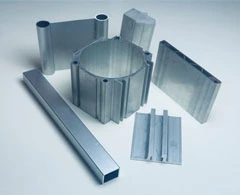
Many custom aluminium shells are produced through a sequence of primary forming and secondary processing. Extrusion is useful when the part has a continuous cross-section and needs consistent wall geometry over its length. After extrusion, the profile can be cut to size and machined to create the features that cannot be formed efficiently in the die.
CNC machining may be used for mounting holes, threaded holes, slots, connector openings, precision faces, pockets and assembly features. This step is especially important when the shell must locate internal components accurately or mate with other parts. Tolerance requirements should be separated into critical and non-critical dimensions so that machining effort is focused where it adds functional value.
Surface finishing is then selected according to environmental, functional and appearance requirements. Anodizing can provide a durable oxide layer and a clean appearance, while powder coating or spray coating may be selected for color, exterior protection or product branding. Deburring, cleaning and inspection should be included in the process plan because sharp edges, chips or finish defects can create assembly problems even when the main dimensions are correct.
Typical production route
· Profile and tooling review
· Aluminium extrusion
· Cutting to length
· CNC machining / drilling / tapping
· Deburring and cleaning
· Surface finishing
· Dimensional and appearance inspection
A clear RFQ package reduces quotation uncertainty and helps the manufacturer evaluate tooling, machining time, finishing and inspection requirements. At minimum, the following items should be defined:
Specification item | What to define |
Application | Automotive, new energy vehicle, motor, industrial equipment or other end use |
Material | Required alloy or performance requirements if alloy is not yet fixed |
Dimensions | Overall size, wall thickness and critical interfaces |
Tolerances | Critical dimensional and geometric tolerances |
Machined features | Holes, threads, slots, pockets, datum surfaces and connector openings |
Surface finish | Anodizing, coating, spray finish or other requirement |
Assembly needs | Fasteners, mating parts, internal component clearances and sealing interfaces |
Drawing files | 2D drawing plus 3D model when available |
Quality requirements | Inspection points, appearance criteria and documentation |
Quantity | Prototype, pilot run and expected mass-production volume |
For automotive and industrial programs, buyers should also identify which dimensions affect fit, sealing, safety or assembly. Not every dimension needs a tight tolerance. Over-specifying non-critical tolerances can increase machining and inspection cost without improving the finished product.
The drawing should also make clear whether the shell is a simple protective cover or a structural component that supports loads, mounting forces or internal assemblies. This distinction affects material selection, wall design, machining strategy and validation requirements.
An aluminium shell is used as an external protective or structural housing for components in automotive, new energy vehicle and industrial products. Its exact function can range from simple protection to mounting and structural support, depending on the design.
Yes. Custom shell projects are commonly evaluated from customer drawings and application requirements. Providing both 2D drawings and a 3D model helps the manufacturer review extrusion feasibility, machining features, tolerances and finishing requirements.
Extrusion is efficient for creating the main continuous cross-section, while CNC machining is used for local features such as holes, threads, slots, pockets and precision mounting surfaces. Combining the two is often more efficient than machining the complete shell from solid stock.
There is no universal wall thickness. It depends on alloy, profile size, structural loads, extrusion feasibility, machining requirements and the need to control weight. The final value should be confirmed during design and manufacturing review.
Common options include anodizing, powder coating and spray coating. The best finish depends on corrosion exposure, appearance, wear, color and assembly requirements.
Provide the drawing, material or performance requirement, dimensions, tolerances, machining features, surface finish, quality requirements and expected order volume. Clear application information also helps the supplier evaluate manufacturability and cost.
For OEM buyers developing automotive or industrial housings, Wuhuan manufactures custom aluminium shell components from customer drawings. Its current product positioning focuses on aluminum alloy shells for automotive and industrial applications, including lightweight requirements in new energy vehicle projects. Buyers can submit drawings and production requirements for manufacturability and quotation review.
 EN
EN