Selecting an aluminum heat sink supplier is not only about finding a factory that can extrude a profile. For OEM projects, the supplier may also need to support thermal design requirements, extrusion tooling, CNC machining, surface treatment, dimensional inspection and repeatable mass production. A mismatch at any stage can affect assembly, thermal performance or production consistency.
When choosing a China aluminum heat sink manufacturer for a custom extrusion project, buyers should evaluate extrusion capability, alloy selection, fin and profile design, machining capacity, surface finishing, tolerance control, quality documentation and the ability to move from prototype or mold validation into stable volume production. The right supplier should be able to manufacture the heat sink around the actual thermal, mechanical and assembly requirements of the application.
These factors become especially important for heat sinks used in LED lighting, power electronics, automotive systems and other equipment where space, heat load and mounting conditions vary significantly. The following sections explain how aluminum extrusion works for heat sinks, what buyers should check when evaluating a manufacturer, and how to prepare a custom heat sink project for production.
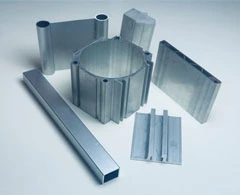
Aluminum extrusion is widely used for heat sinks because the process can produce continuous profiles with fins, mounting features and other cross-sectional details incorporated into the design. After a die is developed, the same profile can be produced repeatedly and cut to the required length, making extrusion suitable for many medium- and high-volume thermal management projects.
Aluminum also provides a practical balance between thermal performance, weight, corrosion resistance, manufacturability and cost. The material can be extruded into relatively complex fin structures and then further processed through CNC machining, drilling, tapping or surface treatment.
For heat sink design, however, extrusion capability should be considered together with thermal requirements. Increasing the number or height of fins does not automatically guarantee better cooling. Fin spacing, airflow direction, base thickness, heat-source location and available installation space all influence the final design.
For this reason, OEM buyers should provide more than an overall width and length. Thermal load, mounting method, airflow conditions and mechanical constraints are useful inputs when developing or reviewing a custom extrusion profile.
A heat sink manufacturer should be evaluated according to the complete production route rather than extrusion capacity alone.
Extrusion capability is the first consideration. Buyers should confirm whether the supplier can manufacture the required profile width, fin geometry, wall thickness and overall cross-section with acceptable consistency.
Alloy and temper selection also matter. Wuhuan's current aluminum heat sink extrusion range primarily uses 6063-T5, a commonly used extrusion alloy for heat sink production. The appropriate alloy should still be selected according to the thermal, structural, machining and finishing requirements of the individual project.
Secondary machining capability becomes important when the finished part needs mounting holes, threaded holes, pockets, flatness control or component interfaces. A supplier that combines extrusion and CNC machining can reduce the number of separate production steps for custom projects.
Surface treatment should also be evaluated according to the operating environment and appearance requirements. Anodizing, coating and unfinished machined surfaces each have different implications for corrosion resistance, appearance and production cost.
Finally, buyers should check tooling control, dimensional inspection, sample validation, quality documentation, batch consistency and production lead time. Wuhuan currently states that it supports custom drawings, mass production and a production lead time of approximately 7-15 days after mold confirmation for its heat sink extrusion range.
Different applications place different demands on an aluminum heat sink. A profile that works well for an LED lighting product may not be suitable for an inverter, motor drive or automotive power module.
For LED lighting, heat sink selection often focuses on compact size, passive cooling, appearance and integration with the luminaire structure. Fin geometry and surface area need to fit within the available housing while allowing heat generated by the LED source to move away effectively. Wuhuan has a dedicated LED heatsink product range for industrial and general lighting applications.
For power electronics, heat loads may be higher and more concentrated. Components such as IGBTs, inverters, power converters and motor drives can require larger bases, more controlled mounting surfaces and designs intended for either passive or forced-air cooling. Wuhuan's current power electronics heat sink range specifically targets IGBTs, inverters, EV charging, solar converters and motor-drive applications.
For automotive and EV applications, weight, corrosion resistance, vibration environment, packaging space and mechanical integration become additional considerations. Heat sinks may be used around battery systems, power converters and motor drives, and the geometry often needs to be customized to the vehicle platform. Wuhuan currently lists automotive heat sinks for EV batteries, power converters and motor drives.
Instead of choosing a heat sink by size alone, OEM buyers should therefore evaluate the complete operating condition: heat load, airflow, mounting area, installation orientation, environmental exposure and available space.
A custom extrusion project normally begins with a drawing, 3D model or functional requirement. The more complete the project information is at this stage, the easier it is for the manufacturer to evaluate extrusion feasibility and downstream machining.
A typical development route can include:
Review of the drawing and application requirements.
Selection or confirmation of the aluminum alloy and temper.
Extrusion profile and die feasibility review.
Tooling or mold production.
Trial extrusion and sample validation.
Cutting and CNC machining.
Drilling, tapping or other secondary operations.
Surface treatment when required.
Dimensional and visual inspection.
Packaging and volume production.
Before releasing a drawing, buyers should clearly identify critical dimensions, tolerance zones, mounting interfaces, hole positions, flatness requirements and any surfaces that contact heat-generating components.
The heat sink should also be reviewed as part of the complete assembly. For example, a technically manufacturable fin profile may still create problems if it interferes with connectors, fans, fasteners or adjacent components.
For customized projects, it is therefore useful to work with a supplier that can review both extrusion and post-machining requirements before tooling is finalized. This can reduce unnecessary redesign after the first sample is produced.
For buyers comparing suppliers, the China aluminum heat sink range from Wuhuan provides a reference point for custom extruded, machined, LED and board-level heat sink requirements. The company states that it supports drawing-based customization, 6063-T5 heat sink extrusion and mass production.
Provide the 2D or 3D drawing, overall dimensions, critical tolerances, expected quantity, alloy or material requirement, surface treatment, machining details and application information. Thermal load and airflow conditions are also useful when the design still requires engineering review.
No. Extrusion works best when the primary geometry can be produced as a continuous cross-section. Very complex internal structures, extremely dense geometries or features that change along the length may require additional machining or another manufacturing method.
6063 is widely used for heat sink extrusion because of its extrusion characteristics and suitability for thermal management applications. Wuhuan's current heat sink extrusion page identifies 6063-T5 as its primary material. Final alloy selection should still consider the mechanical, thermal and finishing requirements of the application.
CNC machining is commonly required when the heat sink needs precise mounting holes, threads, pockets, cutouts, flat component-contact surfaces or dimensional features that cannot be created directly by extrusion.
Common options include anodizing, coating and unfinished machined aluminum. The appropriate finish depends on corrosion resistance, appearance, operating environment, thermal requirements and project cost.
Compare more than unit price. Evaluate extrusion capability, die development, CNC machining, surface treatment, tolerance control, inspection, sample validation, production consistency, documentation and communication during custom development.
For OEMs developing custom thermal management components, Wuhuan Aluminum manufactures aluminum heat sink extrusions for LED lighting, electronics, power equipment, automotive systems and other industrial applications. Buyers can submit drawings and production requirements for evaluation before tooling and mass production.
 EN
EN